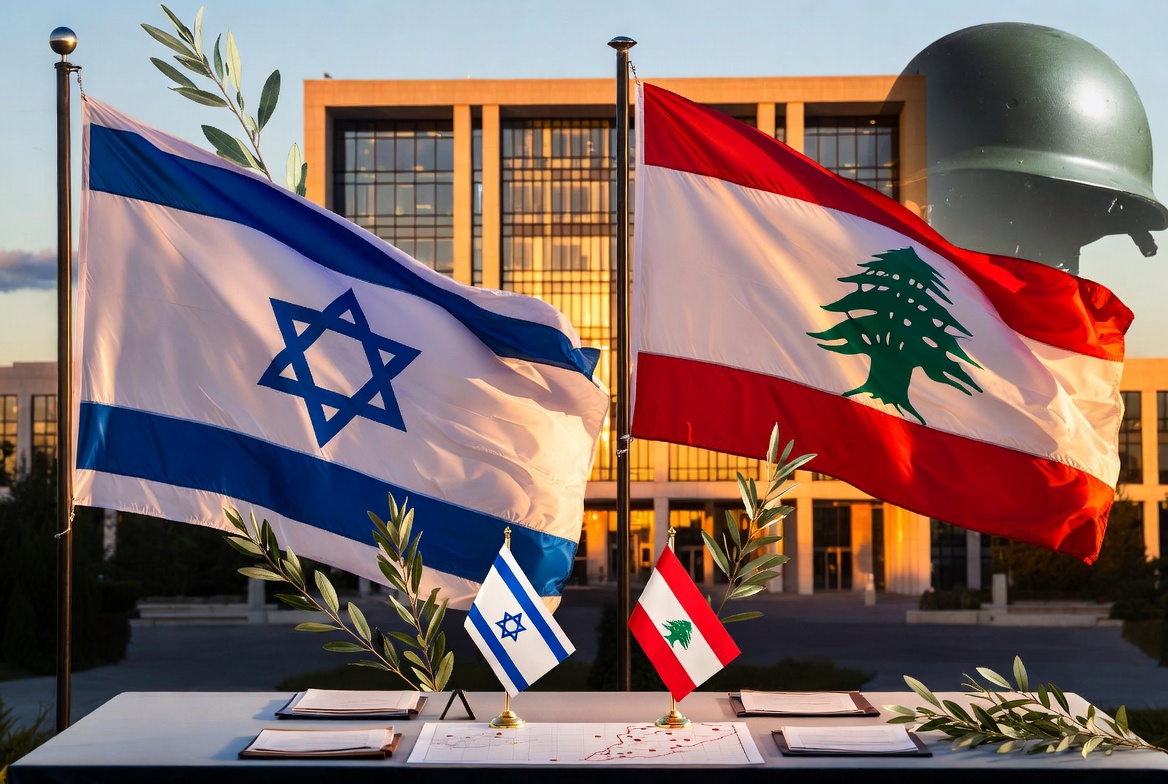
Amid the fragile US-Iran two-week ceasefire, Israeli Prime Minister Benjamin Netanyahu has ordered direct ceasefire negotiations with Lebanon to begin as soon as possible. Following deadly Israeli strikes on April 8, 2026, that killed over 350 people in Lebanon, talks are expected to focus on disarming Hezbollah and establishing peaceful relations. Lebanese officials have expressed skepticism, insisting on "no negotiations under fire." These talks, likely starting in Washington, could impact the broader Middle East peace process, including the Islamabad US-Iran negotiations. The situation remains highly volatile with ongoing strikes and rocket fire.
The Israel-Lebanon conflict has entered a critical new phase in April 2026. Just days after the United States and Iran agreed to a fragile two-week ceasefire, Israeli Prime Minister Benjamin Netanyahu announced that Israel will begin direct negotiations with Lebanon “as soon as possible.” These talks aim to achieve two main goals: the disarmament of Hezbollah and the establishment of peaceful relations between Israel and Lebanon. The announcement came one day after Israel launched some of its heaviest strikes on Lebanon on April 8, killing over 350 people and injuring more than 1,200 — one of the deadliest days in the ongoing war. While both sides have signaled willingness to talk, Lebanese officials remain skeptical, stating “no negotiations under fire.” The planned talks (expected at ambassador level in Washington) are closely linked to the broader US-Iran negotiations starting in Islamabad, as Iran considers its ally Hezbollah an inseparable part of any regional ceasefire. Background: How the 2026 Israel-Lebanon War Escalated The current round of fighting intensified on March 2, 2026, when Hezbollah fired rockets and drones into Israel in solidarity with Iran, just days after the US and Israel launched major strikes on Iranian targets (including the assassination of Supreme Leader Ali Khamenei). Israel responded with large-scale airstrikes and later a limited ground invasion into southern Lebanon. By late March, Israeli forces had occupied parts of southern Lebanon up to the Litani River area, issuing mass evacuation orders that displaced over one million Lebanese civilians. Hezbollah, Iran’s most powerful proxy, has been significantly weakened but continues sporadic rocket attacks on northern Israel. Israel’s stated objective is to create a secure “buffer zone” along its northern border and permanently neutralize the Hezbollah threat. The war has already caused: Over 1,800–2,000 deaths in Lebanon (including civilians and fighters) Hundreds of injuries and massive destruction in Beirut suburbs and southern villages Severe humanitarian crisis with displaced populations and damaged infrastructure Netanyahu’s Announcement and Israel’s Position On April 9–10, 2026, Netanyahu stated that in response to Lebanon’s repeated calls for direct talks, he had instructed his cabinet to begin negotiations immediately. He emphasized that the focus would be on: Complete disarmament of Hezbollah Withdrawal of Hezbollah forces from southern Lebanon Long-term peaceful relations between the two countries Israel has made it clear that the US-Iran ceasefire does not automatically apply to Lebanon, and Israeli strikes against Hezbollah targets continue even as talks are prepared. Lebanon’s Response and Challenges Lebanese President Joseph Aoun and other officials have welcomed the idea of talks but insist that Israel must stop its military operations first. A senior Lebanese official said, “No negotiations under fire.” Lebanon is in a weak negotiating position due to: Heavy destruction from Israeli strikes Internal political divisions Economic collapse worsened by the war Hezbollah’s strong influence within the country Many analysts believe Lebanon’s government lacks the power to fully disarm Hezbollah without massive internal conflict. Key Issues in the Upcoming Talks The negotiations (likely to begin in Washington next week) are expected to cover: Disarmament of Hezbollah — Israel’s top priority. Hezbollah must withdraw from the border area and give up its heavy weapons. Israeli Withdrawal from Southern Lebanon — Lebanon demands full Israeli pullout from occupied territories. Security Arrangements — Possible deployment of Lebanese Army or international forces along the border. Humanitarian and Reconstruction Issues — Ceasefire, aid access, and rebuilding destroyed areas. Link to US-Iran Ceasefire — Iran has warned that continued attacks on Hezbollah could derail the Islamabad talks. Connection with US-Iran Talks in Islamabad The timing is highly sensitive. Iran has stated it will not fully participate in Pakistan-hosted talks unless the Lebanon issue is addressed as part of a comprehensive ceasefire. Analysts call Lebanon the “Achilles heel” of the US-Iran truce. Any major escalation in Lebanon could collapse the fragile two-week ceasefire and restart wider regional war. Humanitarian Crisis and Global Concerns The war has created a deepening humanitarian disaster in Lebanon: Hundreds of thousands displaced Damage to hospitals, schools, and civilian infrastructure Risk of disease outbreaks and food shortages International leaders, including US President Trump, are pressing both sides to de-escalate. However, continued Israeli strikes and Hezbollah rocket responses are raising fears that talks may fail before they even begin properly. Challenges and Risks Ahead Deep mistrust between Israel and Lebanon (no formal diplomatic relations) Hezbollah’s refusal to disarm easily Iran’s influence and possible retaliation Domestic pressure on Netanyahu to deliver a decisive victory Risk of talks collapsing and full-scale war resuming If successful, these talks could lead to a historic agreement and long-term stability on Israel’s northern border. If they fail, the conflict could expand further and threaten the entire Middle East peace process. Pakistan’s Role and Broader Implications While the Israel-Lebanon talks are set for Washington, Pakistan’s successful mediation in the US-Iran ceasefire has drawn global attention. Many observers hope that similar diplomatic efforts can help resolve the Lebanon crisis as well. A stable resolution in Lebanon would: Reduce regional tensions Allow focus on reconstruction Support global energy security and economic recovery Conclusion The emerging Israel-Lebanon ceasefire talks represent a rare diplomatic opening after weeks of intense fighting. However, with Israeli strikes continuing and deep divisions on both sides, the path to peace remains extremely difficult. The coming days will be decisive. Success in Washington could help stabilize the fragile US-Iran ceasefire and bring relief to millions affected by the conflict. Failure, on the other hand, risks reigniting a wider war involving multiple regional players. The world is watching closely as Lebanon and Israel prepare for historic — yet highly uncertain — direct negotiations.Israel-Lebanon Ceasefire Talks 2026: Full Details of Washington Negotiations, Hezbollah Disarmament, and Regional Risks

April 11, 2026
1:45 PM
12 views